


For more information, go to:Amacon.co.uk
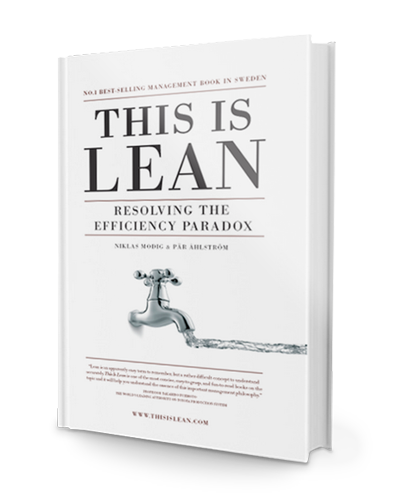
In sub-optimised operations we focus on the efficiency of the various parts instead of seeing the big picture. This leads to what we often refer to as tunnel vision, and which the book describes as the efficiency paradox. When companies and organizations become more streamlined, we feel that we are efficient, even though we are in fact extremely inefficient. It creates what the book describes as “effective islands”, and many of the problems that companies and organizations experience is created between these islands. If we do not see the big picture we do not understand what real efficiency is.
This is lean presents a new form of efficiency: flow efficiency. Instead of focusing on individual business functions, the focus is on the flow efficiency of customer needs. Seeing the big picture means that many problems can be avoided and eliminated. Customer experience is improved by shortening queues, freeing up capacity, creating more efficient processes and improving quality. There are huge gains to be realized by looking at efficiency in a new way.
This is lean is now translated into English, Norwegian and Danish and has since its launch in October 2011, sold over 50,000 copies (including the first edition of What is Lean?).
Buy at Amacon.co.ukTakahiro Fujimoto
Professor, The World’s Leading Authority On Toyota
John Lagerling
Senior Director, Android Global Partnerships, Google
Christian Levin
Central Connecticut, State University
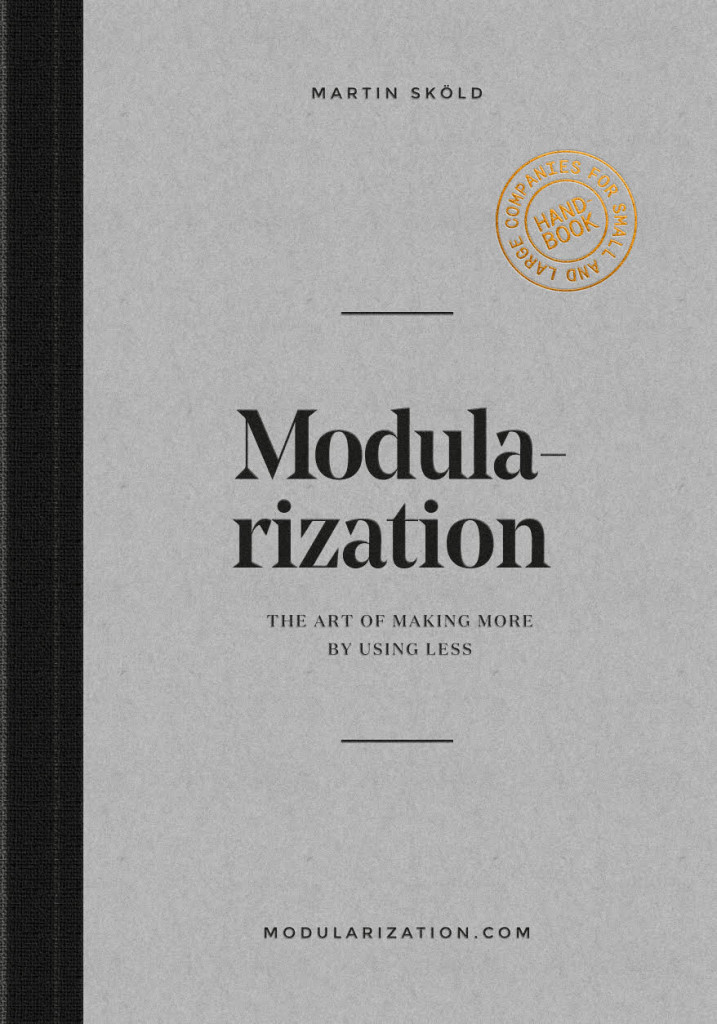
Some organizations are like a subway. They are experts in creating high volume by transporting thousands of people every day. The high volume is a prerequisite for low costs, but this also means that goods and services are general and are the same for everyone. Therefore, the subway cannot transport each customer exactly where they want to go; they can only follow certain routes.
Other organizations are like a cab, specializing in handling high variety and driving the customer exactly where they want to go. The high variety provides customer value and revenue benefits because the product or service is flexible and customized to suit each customer’s unique needs. But the high variation also means that volume is low, as the number of customers per taxi is low. Volume and variety pull organizations in opposite directions and they are forced to make a trade-off.
However, with a clear structure, and many good examples, Martin shows that modularization is the foundation to achieving double competitiveness. It is a strategy to beat the trade-off between volume and variety. It combines the benefits of high volume and high variety and provides a strong competitive advantage by combining low costs with high revenue. It is a strategy which can be applied across all types of industries and in the private and public sector.
Azita Shariati
CEO Sodexo AB
Henrik Henriksson
President & CEO of Scania
For more information, go to:Innovative Growth
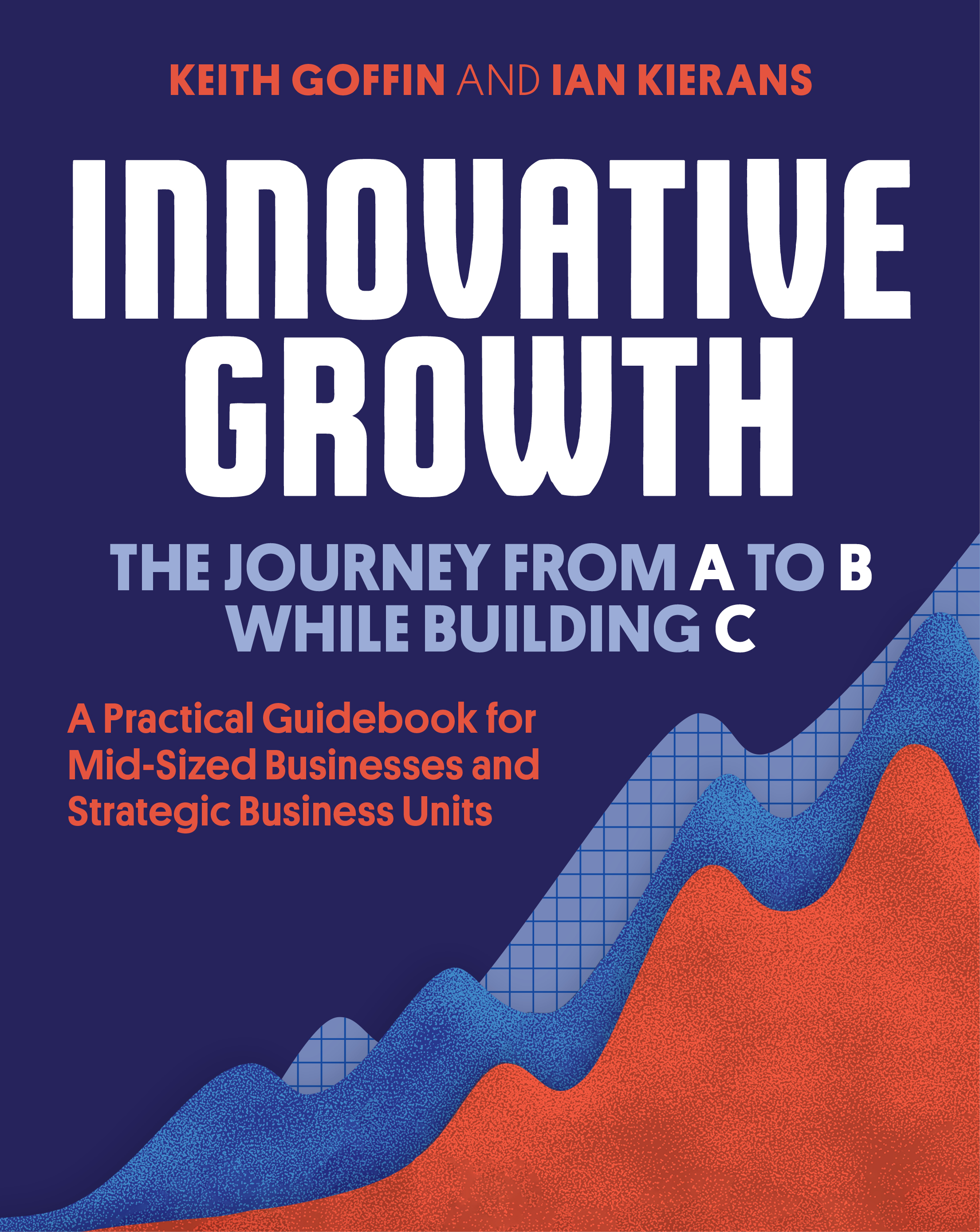
This authoritative, no-nonsense book will guide your business in its innovation journey from Point ‘A’ where it currently is, to Point ‘B’, the performance you want. It cuts through the clutter of innovation tools, to focus on the essential capabilities ‘C’ that drive growth.
Five integrated phases that lead to Innovative Growth are clearly mapped out: Shaping innovation strategy; Organizing for the journey; Developing deep insights and novel solutions; Selecting projects to implement; and Getting innovations to market. At each phase the processes that make innovation possible and, crucially, the mindsets needed to make it happen, are brought to light.
Includes 24 international case studies–such as Red Ventures (USA)
Patagonia (USA), Svensson (Sweden), Pinarello (Italy), Diageo (EU), SoftBank
Robotics (France) and DC (Ireland). These insightful cases demonstrate how
innovative growth really happens.
Paschal Donohoe
Minister for Finance, Ireland
President of the Eurogroup
Tara Foley
CEO AXA Retail, UK
Dr Shahram Famorzadeh
Senior VP Engineering Dr Chrono, USA

As a marketer, you face many dilemmas: Should you focus on brand-building or sales-focused marketing? Should you use rational or emotional ads? How should you evaluate different media channels against each other? Most experts would like you to believe that there is one right answer to these questions. Unfortunately, the reality is more complex. The correct answer for your specific situation requires an overall understanding of customer psychology. After years of research and working with marketers, Erik Modig and Martin Söndergaard developed the Influence Matrix, a new way to make sense of today’s many marketing theories. The practically applicable framework captures the insights from the 100 most popular books and the 300 most cited peer-reviewed articles in marketing, communication, and decision-making. By applying it, you will be able to identify and tackle your main marketing challenges, taking your marketing strategy and communication tactics to the next level.
Copyright Rheologica Publishing 2013 All rights reserved
